

Personal safety is one of the most important — and most under-discussed — parts of working independently. Because laws, platform availability, and community resources vary enormously by region, there’s no single “safe system” that works everywhere. But there are safety principles that experienced independent workers consistently rely on, regardless of location. This guide walks through them.
1. Build a Personal Screening Process
Don’t outsource your safety entirely to any one tool or network. A layered screening process reduces risk far more than relying on a single check.
- Ask for references. Requesting that a new contact provide a reference from someone they’ve worked with recently is one of the most common and effective screening steps. It creates accountability and a paper trail before any in-person meeting happens.
- Verify identity before meeting. This can include a government ID (with sensitive details obscured), a professional profile, or another form of identity confirmation that a legitimate contact should have no issue providing.
- Take note of communication patterns. Evasiveness about basic questions, pressure to skip verification steps, or refusal to communicate through a traceable channel are all common warning signs.
2. Use Community and Advocacy Safety Networks
In many regions, sex worker-led advocacy and community organizations maintain confidential reporting systems — often called “bad date lists” — where dangerous or abusive individuals can be flagged anonymously to warn others. These are typically run by trusted community or non-profit groups rather than commercial platforms, and are one of the more reliable safety resources available, since they’re built by and for people navigating the same risks.
If you’re not sure what exists in your area, local sex worker advocacy organizations are usually the best starting point — they can point to region-specific legal resources, health services, and safety networks.
3. Set Up a Check-In System
A “safety call” or check-in system — where a trusted person knows your schedule, location, and expected return time — is a simple but highly effective safeguard, especially for outcalls. Options include:
- A trusted friend or peer who checks in with you at set times
- Automated check-in apps that send an alert if you don’t confirm safety by a certain time
- Sharing live location with someone you trust for the duration of a meeting
The key is having a clear plan for what happens if you don’t check in — not just the check-in itself.
4. Keep Personal and Professional Identity Separate
Digital compartmentalization reduces the risk of harassment, doxxing, or unwanted exposure:
- Use a dedicated phone number (VOIP or a separate SIM) that isn’t linked to your legal identity
- Keep financial accounts used for work separate from personal banking
- Avoid cross-linking work profiles with personal social media
- Be cautious about metadata in photos (location data, reflections, background details) that could reveal your identity or location
5. Know Your Legal Landscape
Laws around sex work — and around advertising, screening, and data privacy connected to it — differ dramatically by country and even by state or city. What’s a reasonable safety practice in one jurisdiction may carry legal risk in another. Before relying on any specific tool or process, it’s worth checking:
- Local decriminalization or criminalization status
- Data privacy protections (or lack thereof) for platforms you use
- Advocacy organizations in your region who track legal changes and can advise on current risks
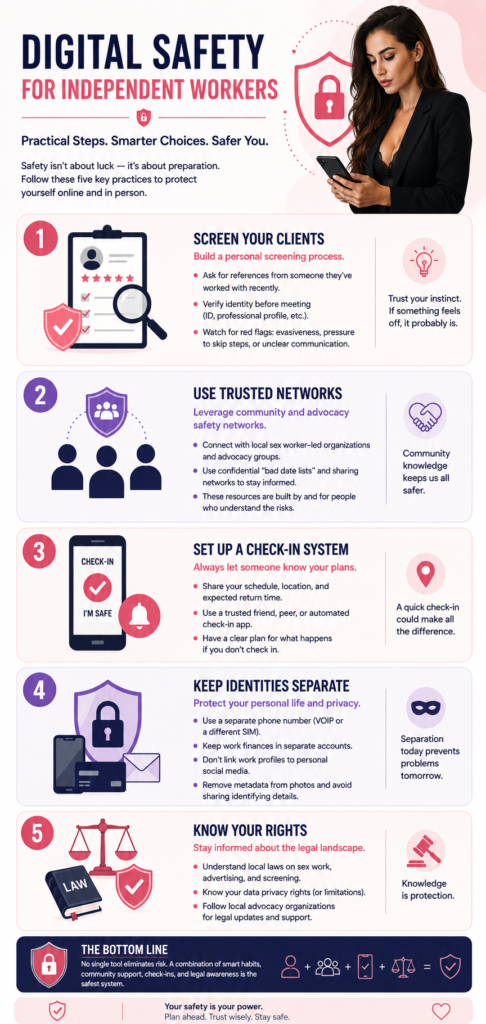
The Bottom Line
No single tool, app, or network eliminates risk. The safest approach combines personal vetting habits, community-based safety resources, a reliable check-in system, and staying informed about your local legal environment. Building these into a consistent routine — rather than treating any one step as sufficient on its own — is what actually reduces risk over time.