

Running an independent escort business requires more than professionalism and excellent client service—it also demands a strong commitment to personal safety and operational security. Every booking presents unique considerations, making effective client screening and digital safety essential parts of an independent provider’s workflow.
As legal frameworks and platform availability differ from one jurisdiction to another, many experienced providers adopt a multi-layered approach that combines trusted screening networks, verification platforms, and consistent personal vetting protocols. This approach helps reduce risk while creating a structured process for evaluating new enquiries.
Why Client Screening Matters
No single platform or verification method can guarantee complete safety. Instead, experienced providers often rely on multiple sources of information before confirming an appointment.
A comprehensive screening process can help:
- Verify client identities where appropriate.
- Identify potential red flags early.
- Reduce fraudulent enquiries and no-shows.
- Create a consistent booking workflow.
- Improve personal confidence before meeting new clients.
Rather than depending solely on public reviews, many providers use trusted peer networks and independent verification tools as part of their overall safety strategy.
Closed-Loop Client Review and Screening Databases
Public review boards may contain inaccurate information or create unnecessary privacy concerns. For this reason, many independent providers prioritise closed-loop screening networks where verified professionals can exchange objective feedback and document safety concerns confidentially.
TER (The Review Companion)
TER is described as a peer-to-peer background verification network widely used across North America. It allows providers to cross-reference client phone numbers, email addresses, and online handles against previous provider feedback to identify potential concerns before accepting a booking.
Preferred411
Preferred411 functions as a dedicated client verification database that helps providers determine whether prospective clients have previously been screened and reviewed positively by other independent providers. This additional layer of verification can streamline the vetting process for new enquiries.
Community “Bad Date” Lists
Worker-led organisations and non-profit advocacy groups maintain confidential reporting systems that enable providers to share safety warnings about abusive, fraudulent, or unsafe individuals without publicly disclosing personal information. These community resources offer an additional avenue for sharing safety-related information.
Independent Directories with Built-In Safety Features
Many independent directories have developed safety-focused features designed to support provider autonomy while improving booking security.
Tryst
According to the guide, Tryst was developed with input from sex worker rights advocates and offers provider-controlled listings, integrated verification badges, and policies intended to protect providers’ content from exploitation.
EuroGirlEscort and AdultWork
These directories, commonly used across Europe and the UK, provide features such as client profile indicators, native rating systems, and secure deposit options to help minimise fraudulent enquiries and booking issues.
Eros Guide
As one of the longest-established directory services, Eros Guide incorporates identity verification measures designed to reduce fake profiles and impersonation within its independent listings.
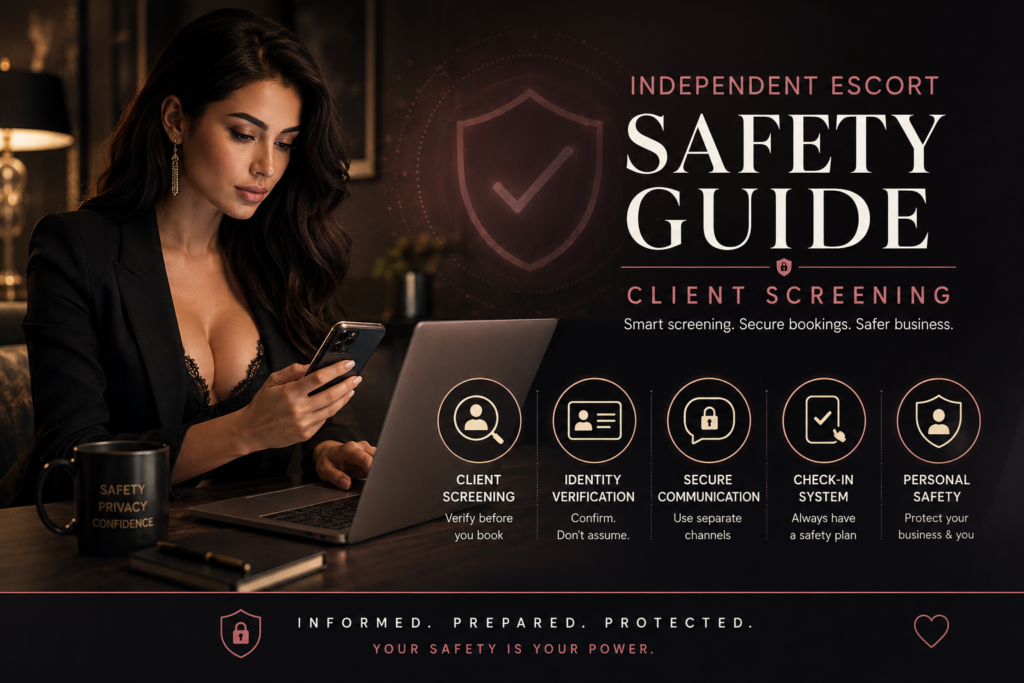
Essential Personal Vetting Protocols
Directory ratings and verification systems provide useful information, but they should complement—not replace—a provider’s own screening procedures. Establishing a consistent, non-negotiable vetting process before every appointment is a key element of personal safety.
1. Provider Reference Checks
When possible, request contact details or online handles for one or two independent providers the client has recently met. Cross-checking these references directly with the named providers helps confirm previous conduct and reliability.
2. Identity Verification
For clients who cannot provide provider references, the guide recommends requesting a government-issued identification document with non-essential information, such as licence numbers or addresses, obscured. Alternatively, professional profiles such as LinkedIn may be used as part of the verification process.
3. Safety Buddy and Check-In System
Maintaining a trusted check-in procedure can provide additional reassurance. The guide suggests coordinating with a trusted peer or using automated timer services that hold appointment details and trigger follow-up if scheduled check-ins are missed.
4. Separate Business Communications
Maintaining operational security also includes separating business communications from personal identities. The guide recommends using dedicated VoIP services, such as Signal, Burner, or Google Voice, while keeping financial and communication channels separate from personal social media profiles and legal names.
A Practical Booking Safety Checklist
Before confirming an appointment, the guide summarises four key steps:
- Verify the client’s handle through TER or Preferred411 where available.
- Collect and confirm two provider references or suitable identity verification.
- Confirm appointments using a dedicated VoIP communication line.
- Set a safety timer or check-in arrangement with a trusted peer before arrival.
Understand Local Legal Requirements
The guide notes that advertising regulations, client data laws, and platform availability vary significantly between jurisdictions. It recommends consulting local sex worker advocacy organisations and legal resources to understand the regulations and safety practices that apply in your specific location before relying on any platform or screening method.
Conclusion
Personal safety is strengthened through consistency rather than any single tool or platform. A structured approach that combines trusted screening databases, independent directories with built-in verification features, personal reference checks, identity verification, secure communications, and reliable check-in procedures can help independent providers establish a more organised booking process.
While available platforms and legal requirements differ by region, maintaining clear screening standards and following a consistent operational security routine can support safer decision-making throughout the booking process.